Plumber in Miami, FL
A plumber in Miami spends more of the week on slabs, cast iron and condo risers than on anything a national how-to video covers. This page explains what the common jobs here involve, what they tend to cost, and how to check the company before anyone cuts into a wall or a floor.
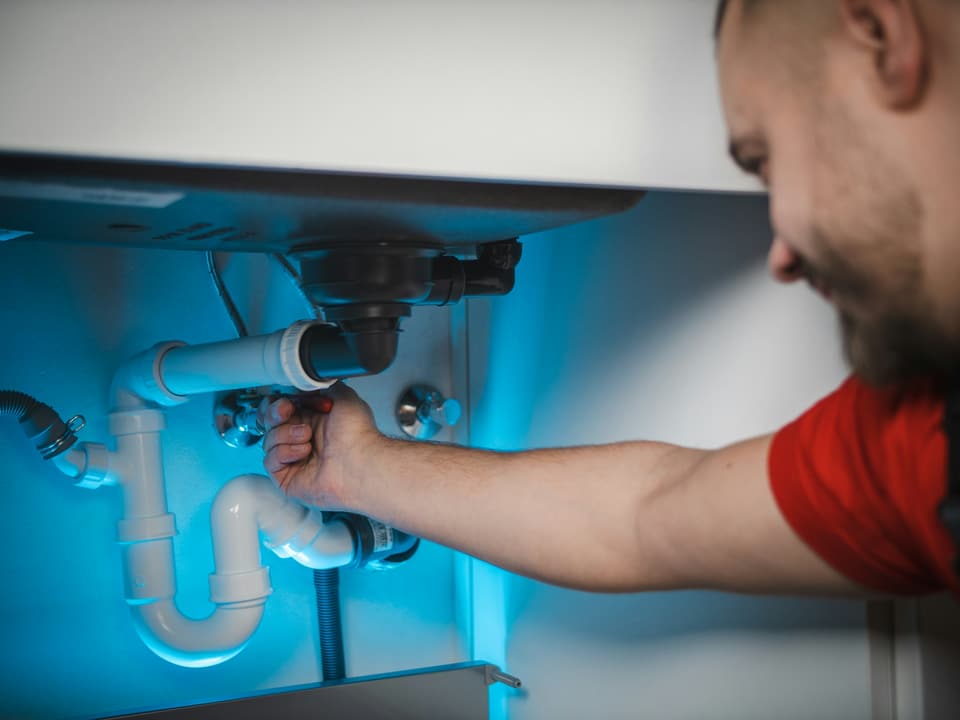
The jobs Miami plumbers see most
Leaks you can see, and leaks you cannot
The easy ones are under a sink, behind a toilet or at a water heater valve: a supply line, a compression fitting, a wax ring. The hard ones are in the slab. A Miami house built before the 1980s usually has its water lines in or under the concrete, and a pinhole leak there shows up as a warm patch on the tile, a water bill that jumped for no reason, or the sound of water running when every tap is off. Finding it is its own job, with acoustic and thermal equipment, before anyone decides where to cut.
Drains that slow down, then stop
Kitchen sinks clog with grease, bathroom drains with hair, and toilets with whatever the household decided was flushable. When more than one fixture drains slowly at once, or the tub gurgles when the washing machine empties, the trouble is usually further down the line: the main drain, the cleanout or the sewer lateral between the house and the street.
Corroded cast iron
This is the job that defines older Miami neighbourhoods. Houses and small apartment buildings from roughly the 1920s to the early 1970s were plumbed with cast-iron drains, and in this heat and humidity many of those lines are failing well before the eighty or hundred years people once quoted. The bottom of the pipe rusts through first, so a line can look sound from above and be open to the sand underneath.
Water heaters
Tank heaters in garages, laundry rooms and condo closets, most of them electric. A ten-year-old tank that starts leaking from the bottom is a replacement, not a repair, and in Florida that replacement needs a permit.
Before the plumber arrives
A few minutes of checking makes the call shorter and the visit cheaper, because the plumber is not paying to discover what you could have told them.
- Where is the water coming from, and is it clean supply water or drain water?
- Does it happen all the time, or only when a particular fixture runs?
- Is it one fixture, or several fixtures at once? Several usually means the main line.
- House, townhouse or condo? In a condo, which floor, and is anyone below you?
- Roughly when was the place built? The Miami-Dade Property Appraiser lists the year for every parcel.
- Is the water meter spinning with everything turned off? If so, there is a leak somewhere on your side.
Why slab houses change the job
Miami houses have no basements and almost none have crawlspaces. The ground floor is a concrete slab poured over fill, with drain lines laid in trenches beneath it and, in older houses, copper or galvanised water lines running through or under it too. That one fact drives a lot of the cost on this site. A repair a plumber in Ohio would do from below with a work light becomes, here, a question of where to break concrete, how much tile to lift and whether to go through the slab, tunnel under it from outside, or abandon the old line and reroute through the walls and attic. Ask which of those a quote assumes. Two numbers that look far apart are often two different methods.
The water table is part of the plumbing
Miami sits on the Biscayne Aquifer, which is close to the surface across most of the city and closer still near the bay. In the wet season and on high tides, groundwater can sit within a few feet of the slab. For a plumber that means a trench under a house may fill with water as it is dug, a broken sewer line can draw sand in with the groundwater and leave a void under the floor, and a septic drainfield in the parts of the county still on septic has less dry soil to work with. It is also why a sewer line that backs up only after heavy rain deserves a camera, not just another round of snaking.
Condos are a different conversation
In a tower in Brickell or Edgewater, or a two-storey garden building in Little Havana, the first question about any leak is ownership. The declaration of condominium says which pipes belong to the unit and which belong to the association, and the line is often drawn at the valve or the wall. Stacks and risers serving several units are usually the association's; the supply line to your dishwasher is usually yours. Most buildings require you to tell the manager before a plumber opens a wall, and many want the plumber's licence and insurance certificate on file before they let them into the building. Call the manager first, and have that conversation before the plumber parks.
If water is coming through your ceiling from the unit above, close your own valve only if the leak is yours, take photographs, and tell the association in writing the same day. Then call, and a local plumber can trace where it is coming from.
Salt air and storm season
Within a mile or two of the bay or the ocean, salt in the air corrodes anything metal left outside: hose bibs, exposed copper at the water heater, backflow preventers on irrigation systems and the brass in the meter box. The other seasonal job is hurricane preparation. A backwater valve on the sewer line stops the city's sewer from pushing back into a low house when the system is overloaded. A standby generator on natural gas or propane needs a gas line run and inspected, which is plumbing and gas work as well as electrical. Both are jobs to book in spring, not the week a storm is named.
Permits, and why a quote should mention them
The Florida Building Code requires a permit for most plumbing work beyond small repairs, including replacing a water heater, replacing drain or supply lines and adding fixtures. In the City of Miami the permit comes from the city's building department; Coral Gables, Miami Beach and Hialeah each run their own; in Kendall and the other unincorporated areas it is Miami-Dade County. A licensed contractor pulls the permit and schedules the inspection. A quote for a repipe or a water heater that says nothing about a permit is either leaving it out or planning to skip it, and an unpermitted water heater is a question an insurer or a buyer's inspector may ask later.
Checking the licence before work starts
Florida licenses plumbing contractors through the Department of Business and Professional Regulation, under the Construction Industry Licensing Board. A plumbing contractor shows up in the state's licence search at myfloridalicense.com either as certified, which is good anywhere in Florida, or as registered, which is tied to a local certificate of competency such as the ones Miami-Dade County issues through its Construction Trades Qualifying Board. Search the company name or the licence number the company gives you, and check that the status is current and the name matches the company on the estimate. Ask for proof of insurance as well. This site does not hold a licence; the company that does the work is the one that needs one.
Not sure whether the job is small enough to wait? Call and describe it. A local plumbing company can usually tell you on the phone whether it needs a visit today, this week, or a part from the hardware store.
| Problem | First thing to check | Usually means | Price driver |
|---|---|---|---|
| One slow drain | Does only that fixture drain slowly? | A local clog in the trap or branch line | Access to the fixture; often a single visit |
| Several slow drains | Does the tub gurgle when the washer empties? | Main line or sewer lateral | Cleanout access; whether a camera is needed |
| Warm spot on the floor | Is the meter moving with everything off? | Hot-water line leaking in the slab | Leak location, then reroute or slab repair |
| Sewage smell or roaches from drains | Is it worse after rain? | Cracked or corroded cast iron, or a dry trap | Camera findings; length of failed pipe |
| Water heater leaking at the base | How old is the tank? | Tank failure; replacement, not repair | Tank size, electric or gas, permit, access |
Where we work in Miami
- ShenandoahSouthwest, off Coral Wayalmost fully built out with Mediterranean Revival houses by 1926, so many original drains here are approaching their hundredth year, if they have not been replaced already
- Little HavanaWest of the riverduplexes and small walk-up apartment buildings sharing one stack or one sewer lateral, where a clog in one unit backs up into the unit below
- BrickellDowntown, south of the riverhigh-rise condos, where the first question on any leak is whether the pipe belongs to the unit or the association, and the building manager usually has to be told before anyone opens a wall
- Coconut GroveOn the bay, southsettled before Miami itself and annexed in 1925, under heavy tree canopy, where roots in an old clay or cast-iron sewer lateral are a familiar cause of a main-line backup
- Little RiverNortheast, below NE 79th Streetpart of the area the county's Connect 2 Protect program has been moving from septic tanks to sewer, so some homes are dealing with a brand-new lateral and an abandoned tank
- AllapattahNorth-central, west of I-95mid-century houses and small rental buildings, many of them tenant-occupied, where the first call about a leak often goes to a landlord rather than a plumber
ZIP codes served33125 · 33127 · 33129 · 33130 · 33131 · 33133 · 33135 · 33137 · 33138 · 33142 · 33145 · 33150
Common questions
What does a plumber cost in Miami?
Local companies generally charge a service or trip fee of roughly $75 to $200 to come out, and simple repairs usually land between $150 and $450 including that visit. Main-line clearing, camera work, water heater replacement and slab leaks each sit in their own, higher ranges. The cost guide has the detail and what moves each number.
Do plumbers charge more at night or on weekends?
Usually, yes. After-hours and Sunday calls commonly carry a higher fee or rate. Ask for the call-out charge and the hourly or flat rate on the phone, before anyone is dispatched.
How do I check a plumber’s licence in Florida?
Use the Department of Business and Professional Regulation licence search at myfloridalicense.com. Search by company or individual name, or by licence number, and confirm the status is current and the name matches the estimate.
Who pulls the permit, me or the plumber?
The licensed plumbing contractor normally pulls it and arranges the inspection. Owner-builder permits exist in Florida but come with conditions, and most homeowners are better off having the contractor carry it.
Is cast iron always bad news?
No. Plenty of cast-iron lines still have years left. The point of a camera inspection is to find out which kind you have: a line with scale and a few rough spots, or one with the bottom rotted through. Those lead to very different quotes.
Should I get more than one quote?
For anything over a few hundred dollars, yes. Compare what each quote includes: permit, slab cutting and patching, tile, drywall, cleanup. A low total that leaves out the concrete patch is not lower.
My building manager says I need a plumber with insurance on file. Is that normal?
Yes. Most Miami condo associations ask for a certificate of insurance before a contractor works in the building, and some require it naming the association. Tell the plumbing company when you call so they can send it ahead.
Can a plumber tell if my house has polybutylene pipe?
Usually at a glance where the pipe is exposed: grey plastic, often stamped PB, common in South Florida houses and condos built from the late 1970s to the mid 1990s. Many insurers ask about it on a four-point inspection.
Who actually does the work?
An independent local plumbing company. This site is an advertising and referral service: it passes your call or request to a company that covers your ZIP. We do not perform plumbing work or hold a plumbing licence, so any warranty is between you and that company; ask for its terms in writing.
Other plumbing work in Miami
- Emergency Plumber in Miami
- Drain Cleaning in Miami, FL
- Cast-Iron Drain and Sewer Line Repair in Miami
- Water Heater Repair and Replacement in Miami
- Leak Detection and Repiping in Miami
Also serving
Plumbing Repair is available beyond Miami, across Coral Gables , Miami Beach , Hialeah and Kendall .
Ask about plumbing repair
Say what is happening and where, and a local plumbing company will call you back to set a time. Phones answered Mon–Sat, 8am–6pm · after hours, leave a message or send the form Or call (786) 432-8693 if water is running right now.