Cast-Iron Drain and Sewer Line Repair in Miami
Cast iron was the standard drain material in Miami for decades, and a lot of it is still in place under houses from the 1920s through the early 1970s. In this climate it tends to fail from the bottom up, out of sight, long before the pipe reaches the lifespan people were promised.
How cast iron fails here
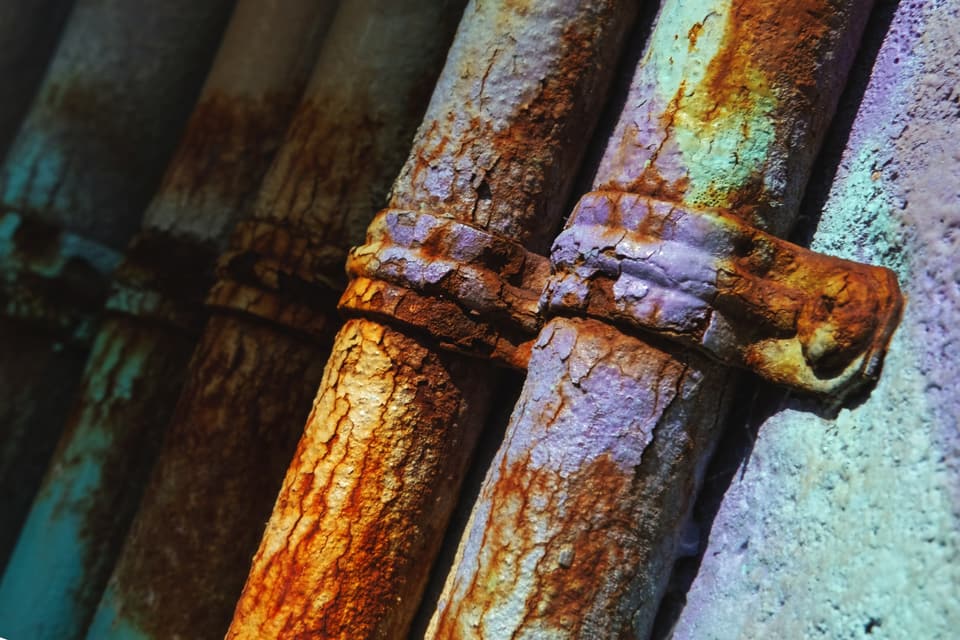
Wastewater and the gases it gives off corrode the inside of the pipe; humid, salty soil works on the outside. The bottom of a horizontal line carries water all the time and rusts thinnest, while the top stays dry and looks solid. The result is the familiar Miami pattern: a pipe that looks fine at the cleanout and has a channel rotted through along its floor under the bathroom. Water and sewage then leak into the fill under the slab, which can wash out sand, settle tile and draw roaches up through the gap.
When cast iron is telling you something
- Drains that clog repeatedly even after cleaning, especially the main line.
- A sewer smell inside with no obvious cause, or roaches coming up through drains.
- Gurgling from a tub or toilet when another fixture drains.
- Cracked or sunken floor tile along the path of a drain line.
- Orange-brown scale or flakes coming back with a cable or jetter.
- A house built before about 1975 that has never had its drains replaced.
The camera comes before the quote
Nobody can price a cast-iron job honestly without seeing inside the line. A camera inspection through a cleanout or a pulled toilet shows scale, cracks, bellies where the pipe has sagged, and places where the bottom is gone. Ask for the recording and a written note of the distances, because that footage is what the next two quotes should be based on. If you are buying an older house, a camera inspection before closing costs little compared with what it can reveal.
Repair, reline or replace
Spot repair
One failed section, such as a cracked fitting under a bathroom, can be cut out and replaced with PVC. It means opening the floor at that point, but it is the cheapest fix when the rest of the line is sound.
Relining
Cured-in-place lining pulls a resin-soaked liner through the old pipe and cures it into a new pipe inside the old one, through the cleanouts and with little or no slab cutting. It needs a line that can be cleaned out and still holds its shape. It suits long runs under finished floors and condo stacks where opening walls in several units is impractical.
Replacement
Opening the slab or tunnelling under the house and laying new PVC is the most disruptive method and sometimes the only sensible one: where the pipe has collapsed, sagged badly, or lost so much of its floor that a liner would have nothing to hold. Some companies tunnel from outside to avoid lifting interior tile; it costs more in labour and saves the floor.
Condos and stacks
In a condo building the vertical stacks and the horizontal lines that serve more than one unit are generally the association's, and in an older Miami building those stacks are often original cast iron. Since the 2022 condominium safety law, Florida's structural integrity reserve studies have to include plumbing, which puts those pipes on the association's planning list. If your unit has a recurring backup, ask the manager whether the stack has been scoped; replacing your branch line will not fix a failing riser.
Insurance, briefly
Cast-iron claims have been a fight between Florida homeowners and insurers for years, and policies differ on whether they cover the cost of reaching and replacing a corroded pipe, the water damage it caused, or neither. Read your policy's language on wear and tear, corrosion and "tear-out" before you assume either way, and keep the camera footage. Many insurers also ask about the drain material on a four-point inspection.
Have a slow main and a house from the 1950s or 1960s? Call to have the line scoped before deciding anything, and get the footage to compare quotes against.
| Method | Disruption | Suits | Watch for |
|---|---|---|---|
| Spot repair | Opens the floor at one point | One cracked fitting or short failed section | The rest of the line failing next year |
| Relining | Little or no slab cutting | Long runs that are corroded but intact; condo stacks | Lines too collapsed to line; warranty terms |
| Replacement | Trenches through the slab or tunnels under it | Collapsed, bellied or bottomless pipe | Tile, concrete patch and permit in the quote |
Other plumbing work in Miami
- Plumber in Miami, FL
- Emergency Plumber in Miami
- Drain Cleaning in Miami, FL
- Water Heater Repair and Replacement in Miami
- Leak Detection and Repiping in Miami
Also serving
Cast-Iron & Sewer Lines also reaches past Miami, into Coral Gables , Miami Beach , Hialeah and Kendall .
Common questions
What does cast-iron drain replacement cost in Miami?
It varies more than any other plumbing job. A single spot repair can be a few thousand dollars; replacing or lining all the drains under a slab house commonly runs well into five figures, depending on length, method, and how much floor has to come up and be restored.
Can I stay in the house while drains are replaced?
Often, with a period where some bathrooms or the kitchen are out of use. Ask the company how many days each fixture will be unavailable and whether they restore a working toilet each night.
Is PVC allowed as the replacement?
PVC is the usual replacement material for residential drains in Florida. The permit and inspection confirm the installation meets the code.
Ask about cast-iron & sewer lines
Say what is happening and where, and a local plumbing company will call you back to set a time. Phones answered Mon–Sat, 8am–6pm · after hours, leave a message or send the form Or ring (786) 432-8693 if water is running right now.